

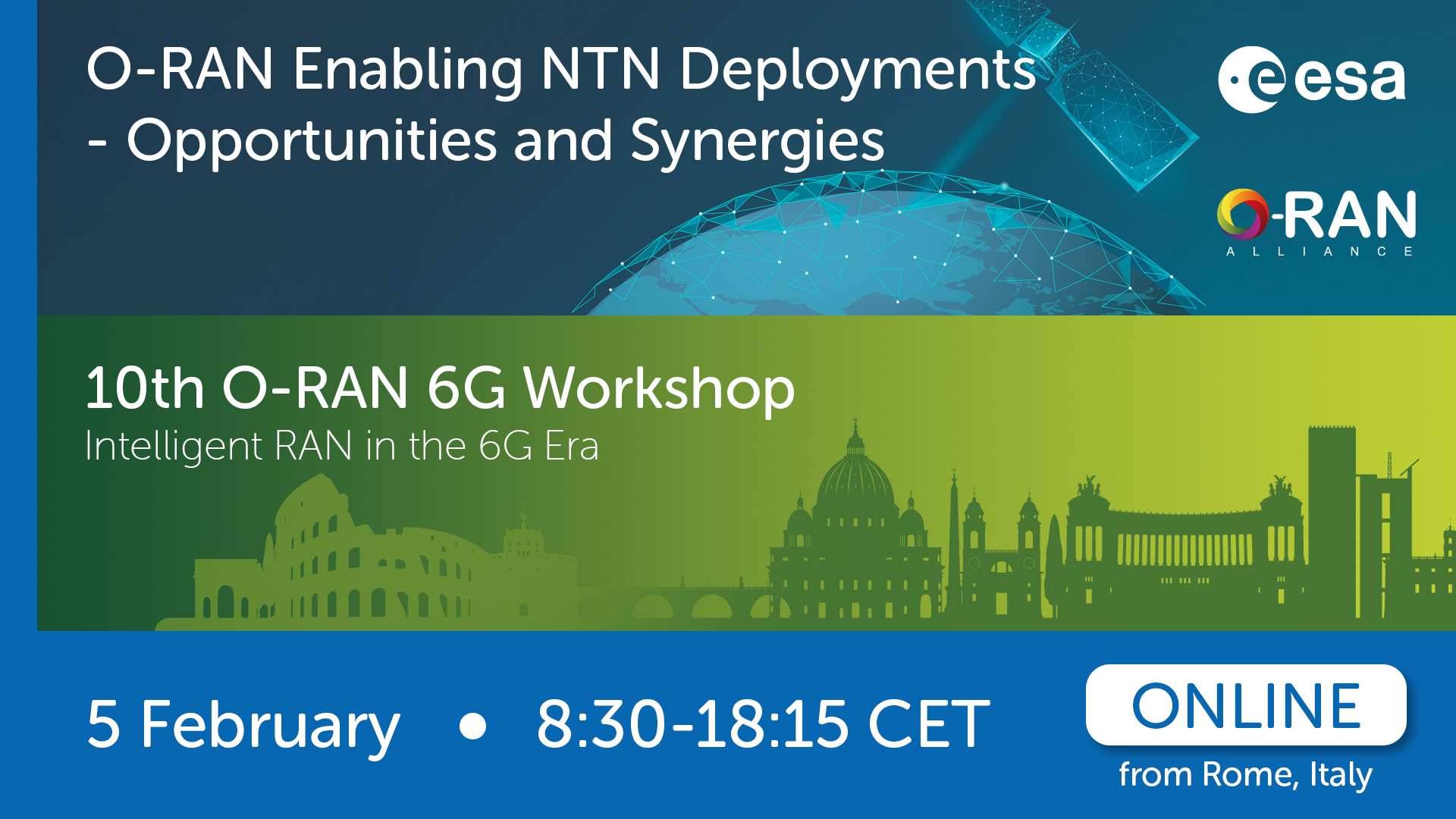
Join us for an outstanding workshop, elaborating on 5G to 6G topics, with a focus on O-RAN Enabling NTN Deployments – Exploring Opportunities and Synergies.
It is composed of 2 parts:
Maria Guta, Senior 5G/6G Satcom Solutions Architect in the 5G/6G NTN Programme Office, Directorate of Connectivity and Secure Communications in the European Space Agency (ESA)
This keynote adresses the boundaries, priorities and the emerging gaps. It presents network/system optimisations - space segment optimisations. It discusses experimentations perspectives and associated roadmap.

Stefan Draškoci, 5G NTN Lead, Aalyria Technologies
Once deployed in space, 5G NTN constellations face a difficult multivariate resource optimisation challenge, whereby finite resources such as time, space, frequency, beam, power, etc. will need to be allocated to deliver connectivity to end users, at times even in coordination with 5G Terrestrial Networks. This presentation will describe the reasons and ways in which the O-RAN RIC/SMO framework is best suited to be the driver of this continuous optimisation and orchestration.
Olivier Hauw, Fast Track Leader Connectivity, Airbus
This presentation will explore how 5G TN/NTN can be considered as the most promising next step for the aviation connectivity and may help induce aviation industry digital transformation.
Ben Ash, Senior Sales Director, Radisys
This presentation focuses on building NTN solutions leveraging 3GPP and O-RAN architecture and the key role of the broader satellite communications ecosystem. It also talks about deployment aspects including hardware and cloud platforms, compute and power constraints, NTN RAN adaptations, orchestration/ control and TN/NTN integration. Presents a view of evolution of NTN solutions.
Eng Wei Koo, Director of Standards and Technology, Keysight Technologies
Space to Earth communications industry trends with Direct-to-Cell/Device (D2C/D2D) connectivity rise to prominence; AI-enabled Non-Terrestrial Networks (NTN) – overview of 5G towards 6G standardization activities in 3GPP and O-RAN ALLIANCE, identify unique design and deployment challenges; share “Space to Lab” methodology which involves digital twin assisted replication and reproduction of real-world space to earth communications conditions in the lab testing environment thereby accelerating NTN commercial deployments.
Kexuan Sun, Senior Principal Wireless Architect, Rakuten Symphony, CTO Office
Awn Muhammad, Head of Technical Standards, Rakuten Mobile
This presentation will cover:
1. Rakuten's strategy and achievement on NTN business.
2. NTN use cases, architecture evolution and standardization.
3. Opportunities and potential solutions with O-RAN including RIC for NTN in 5GA and 6G Era.
Dr. Jevgenij Krivochiza, Engineer, Digital Ground Development, SES S.A.
The presentation covers a hand-on experience of testing NR NTN over legacy GEO and MEO transparent payload satellites. It shows how satellites ephemeris is used to command the timing advance and how to deal with the timing uncertainties in practice.
Dr.-Ing. Markus Breitbach, Senior Expert, Deutsche Telekom Group Technology
Unlike terrestrial network sites, LEO satellites are moving. The presentation examines the mobility of NTN infrastructure and its impact on radio network and transport network functions, highlighting the opportunities this presents for the integration of satellites in terrestrial networks and for seamless service continuity.
RaviKanth Pasumarthy, Vice President and Chief Architect, Capgemini Engineering
As part of 3GPP Rel-17 and beyond there is also evolution to support Satellite networks (NTN) also based on 5G network architecture. Ubiquitous networks based on TN, NTN (and HAPS) is also aligned as one of the visions for 6G based Network architecture. The presentation captures the System solution and architecture considerations to be taken in developing NTN solutions aligned with O-RAN architecture. It shall also provides details of the challenges in realizing the same and guidelines to be considered in addressing the challenges.
Dr. Ian C. Wong, Senior Director of RF and Wireless Architecture, VIAVI Solutions
5G/6G non‑terrestrial networks (NTN) present unique challenges around ensuring QoS, application performance, and stability across orbital variations and UE types. VIAVI’s non‑terrestrial network (NTN) digital twin test solutions addresses these challenges, enabling end-to-end emulation of satellites and NTN access —from component integration to full RAN and core scenarios—covering GEO, MEO, LEO, and HAPS orbits under realistic doppler, delay, and mobility conditions.
Raphaël Ihamouine, Principal Systems Architect at Viasat
This presentation will provide a short, motivation-driven overview on O-RAN related NTN operations from Viasat perspective. Viasat will highlight key operational and control considerations relevant to its NTN deployments, such as convergence considerations, end-to-end intent, control and policy alignment and resource sharing in NTN deployments. The intention behind this presentation would be to share practical NTN use-cases and a satellite operator perspective to the O-RAN discussions.
José Luis Alcolea Coronel, 5G Strategy Manager, Hispasat
This session will cover how the NTN sector will be able to build its infrastructure based on the dynamic ecosystem created and boosted by O-RAN ALLIANCE.
Bert van der Linden, Senior Principal Product Manager, Hub Solutions / 5G NTN Satcom Convergence, ST iDirect
In this session, a senior product manager from ST Engineering iDirect will unpack iDirect’s strategy of integrating 5G Non-Terrestrial Networks into the global telecoms landscape. It highlights iDirect’s cloud-native Intuition ground system which bridge satellite and terrestrial networks through standards-based 3GPP compliance. Attendees will gain insights how software-based 5G NTN radio access technologies and optimized network design enable native 3GPP access over satellite links while ensuring interoperability, expanded coverage, and optimized spectral efficiency. The session will also explore iDirect’s strategic partnership with Capgemini emphasizing their joint development of a satellite-optimized gNodeB base station.
Key takeaways include:
Panel discussion featuring
Nader Zein, Chief Engineer – SatCom Standardisation Lead, NLE - NEC Europe
The presentation is about our NEC 2030 Vision and plan to build Space Digital Infrastructure (SDI) by establishing optical communication networks in space. The presentation summarises NEC activities in its ongoing projects to solve the technical challenges necessary for constructing communication satellite constellations and introduce the space communication technologies currently under development by NEC.
Marco Guadalupi, Telecommunications Engineer from the University of Bologna and Technical Director at Sateliot
Moving beyond simulations, this session presents field results from a live end-to-end integration of a Non-Terrestrial Network with a Tier-1 Mobile Network Operator. We will discuss the practical implementation of interfaces to enable standard NB-IoT connectivity on commercial user equipment, demonstrating the ecosystem’s readiness for mass deployment.
Vincenzo Schena, Head of the R&D Department in the ItalianTelecommunications Domain (DTI), Thales Alenia Space Italia
The presentation focuses on the ongoing activities at Thales Alenia Spazio Italia (TAS-I) in the field of 5G NTN for space. In particular, the results of several ongoing projects with ESA will be described.
Daniele Finocchiaro, Head of R&D and Technology Roadmap, Eutelsat
This presentation will discuss, from the perspective of a satellite operator, the path from legacy systems and standards towards 3GPP; the current activities promoting the adoption of 5G-NTN; and some indications on the way forward for 6G.
Prof. Geoffrey Li, IEEE Fellow, RAE Fellow, Chair in Wireless Systems, Imperial College London, UK
Since our initial work applied deep learning (DL) for joint channel estimation and signal detection in OFDM communications around 10 years ago, tremendous research has been performed in the related area. This talk provides a brief overview on DL for wireless communications in the past 10 years, including DL for physical layer processing, DL for resource allocation, semantic communications, federated learning, and few-shot learning for wireless communications. At the end, we also discuss issues on standardization of DL-enabled wireless communications.
Prof. Hanna Bogucka, Director of the Institute of Radiocommunications, Poznan University of Technology, Poland
The architecture of the prospective 6G network will be almost entirely virtualized and based on software functionalities. These virtualization trends extend from the core to the Radio Access Network (RAN) functionalities. The open specification of the radio interface (O-RAN) and intelligent RAN (AI-RAN) enable higher cost efficiency, transparency, and security. Artificial Intelligence (AI) and Machine Learning (ML) algorithms are planned to reside in near-real-time (RT) Radio Intelligent Controller (RIC) and non-RT RIC, creating significant opportunities to automate RAN operations. However, these additional functions, embedded AI, open interfaces, and virtualization pose challenges regarding communication security, algorithmic cybersecurity, and the privacy of collected data. On the other hand, open architecture with embedded AI enables specialized applications to continuously monitor and analyze security threats, thereby protecting the RAN from malicious and unauthorized access to network segments and from AI-supported attacks on AI algorithms. These opportunities and challenges will be discussed, with examples provided.
Prof. Ashutosh Dutta, Chair of ECE EP, Johns Hopkins University; Chief 5G strategist of APL; Co-chair of IEEE Future Networks
Dr. Emilio Calvanese Strinati, CEA-Leti, France
This talk will survey breakthroughs and trends in AI-enabled semantic communications for 6G and beyond. Unlike 5G systems, which focus on transporting raw data reliably without asking whether every bit is useful, semantic communications targets what matters for the receiver’s goal. The guiding principle is sharing less while understanding more. By prioritizing relevance and meaning, semantic communications can improve efficiency while helping AI agents make better decisions and reason about cause and effect.
The talk first clarifies what semantic communications is (and is not), introducing goal-oriented transmission, meaning-aware reliability, and shared context. It then explains why semantics matters for open, software-driven radio access networks: as automation increases and data flows grow, semantic methods can reduce unnecessary exchange and make optimization more robust.
We then show how semantic communications layers—semantic representation, meaning-aware transmission, and semantic decision/control—map to existing network intelligence loops. We discuss practical integration points: deploying some functions close to the radio for fast decisions, placing others in near-real-time optimization applications, and reserving long-horizon learning and policy for higher-level orchestration. We also outline what the network must provide to make this deployable: consistent semantic measurements, safe management and updating of learned models, and observability to measure and trust gains.
Finally, we position semantic performance indicators within these loops—what must be computed locally for very fast actions, what can be handled in near-real-time optimization, and what belongs to longer-term analytics and governance. The talk closes with challenges and research directions, drawing insights from EU 6G-GOALS, 6G-DISAC, and 6G-ARROW.
Dr. Ulrich Dropmann, Head of Standardization and Ecosystem Engagement, Nokia, Germany
The active 6G standardization has started in 2025, with key events marking the O-RAN / 3GPP workshop in April 2025 and the 3GPP kick-off workshop that preceded in March. The O-RAN-3GPP workshop agreement laid a great foundation to a successful standardization to bring the O-RAN Alliance 6G vision to life. We highlight some key status as of February 2026, priorities and discussions, with emphasis on enabling AI-native 6G and capturing value of 6G.
Mr. Hanen Garcia, Chief Architect, Telecommunications, CTO Office, Red Hat, Spain
This session explores the transition toward 6G AI-Native infrastructure, where cognitive capabilities are embedded directly into the network to enable autonomous operations. We will discuss the practicalities of deploying Large Language Models (LLMs) at scale to support 6G requirements.
Riikka Susitaival, Manager for Network Automation, Ericsson
As the telecom industry is starting to work on 6G, our society as well as IT industry is dramatically changing due to introduction of AI tools and capabilities. Eventually, this trend will also impact standardization of 6G. In this presentation, we discuss how AI impacts mobile networks, what the role of agentic AI is, and how to achieve a sustainable and manageable network architecture that leverages current technologies without limiting the potential for future innovation.
Mr. Clifton Fernandes, Security Expert, Nokia, UK
The importance of 6G is gaining rapid prominence with nations and societies soon going to depend on this. As the importance and technology grows, so does the exposure to malicious actors seeking to exploit vulnerabilities. An unprecedented threat landscape is emerging, driven by a non-exhaustive set of factors including the anticipated rapid proliferation of connected devices, the surge of new digital services, the rise of AI and agentic communication, the expanding API economy, sophisticated cyberattacks to name a few.
Nokia is committed to creating networks with security, privacy, and trust enabled by design from the very beginning of 6G. In the future AI-native networks will only be successful and deliver on their promise if appropriate safeguards and measurements are defined, applied and continuously ensured. The speaker will derive insights and lessons learnt from earlier generations, identify what strategy can be applied and improved in 6G and will also review the status of security standardization efforts and alignment. Nokia considers a list of important security study areas for 6G and topics that will potentially have the greatest impact like Post-Quantum Cryptography (PQC), AI native security, Radio lower layer protection.
In this talk the speaker portrays Nokia’s ambition to design the most cyber-resilient and secure network for 6G from day 1.

Dr. Maria Guta is Senior 5G/6G Satcom Solutions Architect in the 5G/6G NTN Programme Office, Directorate of Connectivity and Secure Communications in the European Space Agency (ESA). Prepares and implements initiatives for 5G/6G satellite solutions fostering the integration of satellite and terrestrial solutions within the 5G/6G and for various verticals. Interfaces with external stakeholders - space and non-space organizations, national space agencies and EU to develop common understanding for the requirements for 5G/6G satellite networks. Leads the ESA hosted NTN-Forum and follows ESA support actions for standardization. She has more than 20 years of experience in satcom field. In her previous positions, she was with Eutelsat (FR) in the Systems Studies Division and the Space Engineering SpA (IT) in the Telecom Programmes Division.
______________________________________

Geoffrey Ye Li, FREng (Fellow of Royal Academic of Engineering) and Fellow of IEEE, is a Chair Professor at Imperial College London, UK. Before joining Imperial in 2020, he was a Professor at Georgia Institute of Technology, USA, for 20 years and a Principal Technical Staff Member with AT&T Labs – Research (previous Bell Labs), USA, for five years. He introduced deep learning to wireless communications around 10 years ago, which has become a popular research area now. He made fundamental contributions to orthogonal frequency division multiplexing (OFDM) for wireless communications, which made him win 2024 IEEE Eric E. Sumner Technical-Field Award. He also won several awards from IEEE Signal Processing, Vehicular Technology, and Communications Societies, including 2019 IEEE ComSoc Edwin Howard Armstrong Achievement Award.
______________________________________
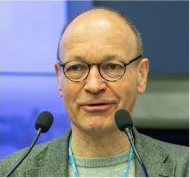
Dr. Dropmann heads the external standardization engagement for Nokia. He is responsible for global and regional standardization including radio spectrum aspects. Ulrich is a Vice President and Executive Committee member of the Global Mobile Supplier Association (GSA). He also serves in the Board of the Metaverse Standards Forum. Between 2022 and 2024, he served as a board member to the Innovative Optical and Wireless Network Global Forum (IOWN-GF). From 2018 to 2022 he was also Board Member of the 5G Association for Connected Industries and Automation (5G-ACIA).
Prior to his current role Ulrich was responsible for Nokia Networks Industry Environment activities. Between 2007 and 2012 Ulrich lead the NSN 3GPP standardization team and has served as Head of Delegation to 3GPP. Between 1996 and 2007, Ulrich held various positions in R&D of Siemens Mobile Networks unit. He was responsible for standardization activities of the core network business unit and managed Siemens 3GPP activities. Ulrich had instrumental role in the definition of the UMTS architecture as well as in set up of project management in 3GPP.
Ulrich holds a Ph.D. from Télécom ParisTech from 1996; his research area was the definition of 3G Radio Interface and his research was part of EU collaborative research program (RACE II ATDMA). He holds a Master Degree (Dipl-Ing) in Telecommunication from the RWTH, Aachen from 1992.

Luca works as a Staff Network Architect at Aalyria Technologies Spacetime division, acting as a Chief Architect for Aalyria's Non-Terrestrial Networks (NTN) and Direct-to-cell/Direct-to-device activities. He specializes in new technology development around 4G/5G/B5G and future 6G in both Terrestrial and Non-Terrestrial Networks (NTN).
Luca comes from a position as Principal Systems Architect at Viasat (previously Inmarsat), with 8 years of experience in System Architecture and Engineering working on various projects, including end-to-end architecture and product requirements for Viasat's NTN and Direct-to-device programmes.
Luca also acts as Aalyria's lead delegate in 3GPP, and co-chair of the ESA NTN Forum Working Group 2 on Vertical Requirements, and was previously lead of mobile standards at Viasat across 3GPP, GSOA, GSMA, GCF and SSIG.
______________________________________

Stefan Draškoci is the 5G NTN Lead for Aalyria Technologies in the UK. He holds a BEng in Electronic Engineering from King’s College London, and has been working in the field of 5G RAN optimisation for the past 6 years. He is the rapporteur for the first NTN-focused Feature Plan in the O-RAN Alliance which is defining in detail the use cases and opportunities for NTN and TN/NTN optimisation, resulting in enhancements to the O-RAN architecture and constituent management interfaces. In Aalyria, he is responsible for architecting and implementing these optimisation capabilities in Aalyria's Spacetime platform, the first fully fledged NTN-capable RAN Intelligence Controller.
______________________________________

Dr. Emilio Calvanese Strinati is Scientific & Innovation Director of Smart Devices, Telecommunications at CEA‑Leti, where he leads future wireless/6G research programs. He received his M.Eng, (2001, Univ. La Sapienza Roma), PhD (2025, Telecom ParisTech, Paris) on telecommunication engineering, he has published over 200 papers and book chapters and co-invented 100+ patents. He was the general chair if EUCNC in 2022 and he organized 50+ international workshops and special sessions (at EUCNC, Globecom, ICC, VTC, etc.). He has coordinated six European projects: 5G-CHAMPIONS, 5GAllstar, RISE-6G, 6G-GOALS, 6G-DISAC and 6G-ARROW. His current research interests are on AI applied to 5G/6G, RIS, ISAC, Semantic and goal-oriented communications.
______________________________________
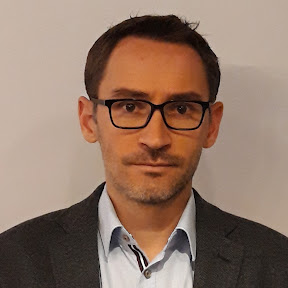
Christian Calamarte, UpNext SpaceRAN Demonstrator Technical Manager, Airbus
Christian Calamarte leads the technical activities for the Airbus UpNext SpaceRAN demonstrator, which focuses on testing 5G NTN solutions. Following 20 years with Airbus Defence & Space working on commercial and military satellite communication systems (GEO and NGSO), Christian joined Airbus UpNext to develop a complete 5G NTN demonstrator. This project aims to test new technologies and collaborative frameworks alongside key technical partners from O-RAN Alliance.
______________________________________

Olivier Hauw is the Airbus Fast Track Leader Connectivity, reporting to the Airbus CTO.
Olivier is building the overall Airbus cross-division strategy linked to the development of connectivity solutions. In that frame, Olivier is in charge of steering all the relevant activities while fostering synergies cross-division.
Over the past 30 years, Olivier has been working in the telecommunications industry. He has been leading the Satellite Communication Services business for Government customers including Operations and Solutions. He was also in charge of managing the relationship with all Satellite Network Operators for the group. Prior to this, Olivier held various roles in programs for Institutional and private customers as well as for the A380 development in Airbus Commercial Aircraft.
Olivier joined Airbus after completing a master degree in Computer Science and Telecommunication at the Institut National Polytechnique (N7) in Toulouse, France.
______________________________________

RaviKanth is working as Vice President at Capgemini Engineering and in his role as Chief Architect, is driving the System architecture, Solution design and offerings in the areas of 5G/5G-Advanced RAN and NTN/Satellite Networks, modelling of TN/NTN network architecture and realization approaches based on O-RAN based architecture.
Ravi is IEEE Senior Member and is also active speaker speaking on 5G-Advanced/6G and NTN related topics in various workshops/conferences.
______________________________________

Dr.-Ing. Markus Breitbach is a Senior Expert in Deutsche Telekom’s Group Technology, working in the area of end-to-end network architecture with a background in radio networks. Before he joined Deutsche Telekom in 2006, he has been with a major infrastructure supplier as UMTS/HSPA Radio Systems Engineer. In Deutsche Telekom, he has been working on network virtualization and campus networks. Currently he is engaged in Deutsche Telekom’s NTN activities and has coordinated the 6G-TakeOff project. His ambition is to design innovative network concepts that fit well into the surrounding ecosystem and business picture.
______________________________________

Riikka Susitaival is working as a manager for network automation, coordinating Ericsson standardisation activities across different standardisation organisations like 3GPP, O-RAN and TM Forum. She received her M.sc. and Ph.D degrees in electrical and telecommunications engineering from Helsinki University of Technology in 2002 and 2007, respectively. Her major in both degrees was teletraffic theory. She joined Ericsson in 2007 and has worked with research and standardization in the area of wireless access networks over 18 years. She has worked as head of Ericsson 3GPP RAN2 delegation and was active contributor for creating 3GPP NR specifications. She has also coordinated Ericsson 3GPP RAN level topics across RAN working groups.
______________________________________
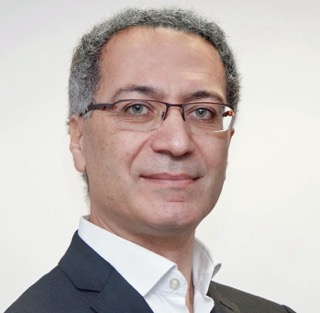
Dr. Daniele Finocchiaro is responsible for Telecom R&D and Projects in the Engineering Department of Eutelsat. He holds a Ph.D. in Computer Science and he has a long experience in the development of new satellite technologies and services. His current activities include standardization and development of 5G on satellite networks.
______________________________________
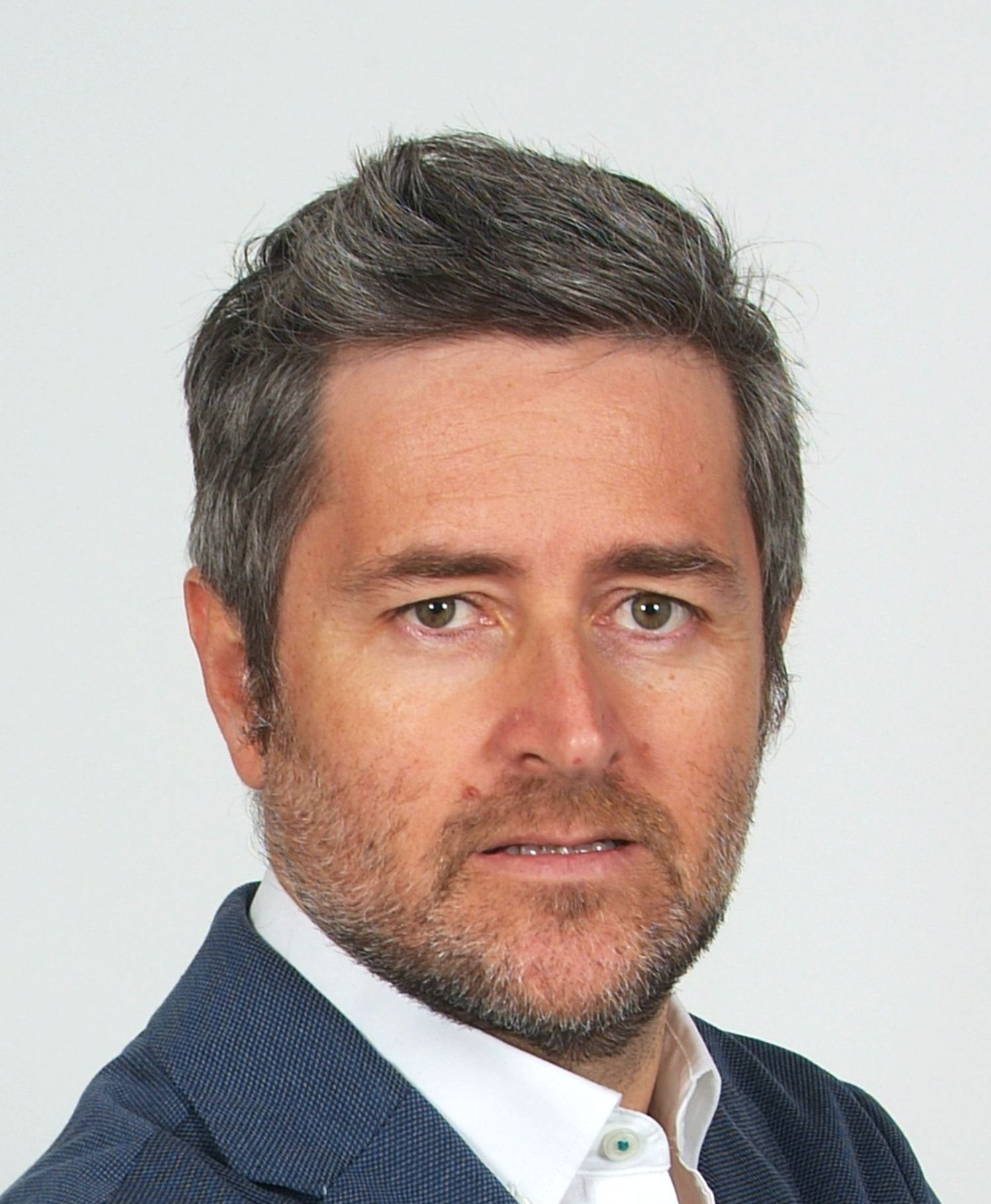
José Luis serves as Hispasat's 5G Strategy Manager. In this role, he is driving the development of the 5G connectivity strategy and leading initiatives that capitalize on emerging market opportunities.
He plays an active role in shaping the international 5G NTN landscape as a member of the NTN Forum Steering Board and as a 3GPP delegate, contributing to global standardization efforts.
A Telecommunications Engineer with nearly two decades of experience. He has worked across multiple segments of the industry, including engineering companies, consulting firms, utilities, telco vendors, and mobile network operators (MNOs). His responsibilities have spanned strategy, innovation, design, deployment, and both pre-sales and post-sales activities. In addition to his extensive technical expertise in 5G mobile communications, he brings a comprehensive understanding of commercial trends in both terrestrial and satellite telecommunications.
______________________________________
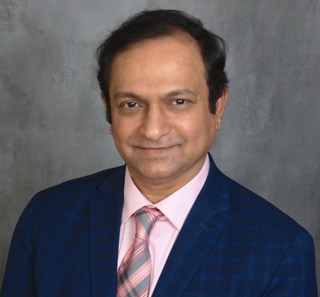
As a Technical Leader in 5G and security, IEEE Fellow Ashutosh Dutta has been serving as the founding Co-Chair for the IEEE Future Networks Initiative that focuses on 5G standardization, education, publications, testbed, and roadmap activities. Ashutosh currently works as Chief 5G Strategist and Fellow at Johns Hopkins University Applied Physics Labs and Chair of Electrical and Computer Engineering for Engineering Professional Program at JHU. Earlier Ashutosh worked as Director of Technology Security at AT&T, CTO for NIKSUN, Senior Scientist in Telcordia Research, Director of Central Research Facility at Columbia University and Computer Engineer at TATA Motors. Ashutosh is the author of more than 100 technical papers and 31 issued patents. Ashutosh is co-author of the book, titled, “Mobility Protocols and Handover Optimization: Design, Evaluation and Application” published by Wiley-IEEE press. Ashutosh currently serves as the founding co-chair for IEEE Future Networks Initiative and Member-At-Large for IEEE Communications Society, where was a Distinguished Lecturer for 2017-2020. He co-founded the IEEE STEM conference (ISEC) and helped to implement EPICS (Engineering Projects in Community Service) projects in several high schools. Ashutosh has served as the general Co-Chair for the IEEE STEM conference for the last 10 years, as well as the Director of Industry Outreach for IEEE Communications Society from 2014-2019. He has served as the general Co-Chair for the premier IEEE 5G World Forums and has organized 80 5G World Summits around the world. Ashutosh currently serves as the Chair for IEEE Industry Connection’s O-RAN activities. Ashutosh is a Distinguished Alumnus of NIT Rourkela with BS in Electrical Engineering, MS in Computer Science from NJIT, and Ph.D. in Electrical Engineering from Columbia University under the supervision of Prof. Henning Schulzrinne.
______________________________________
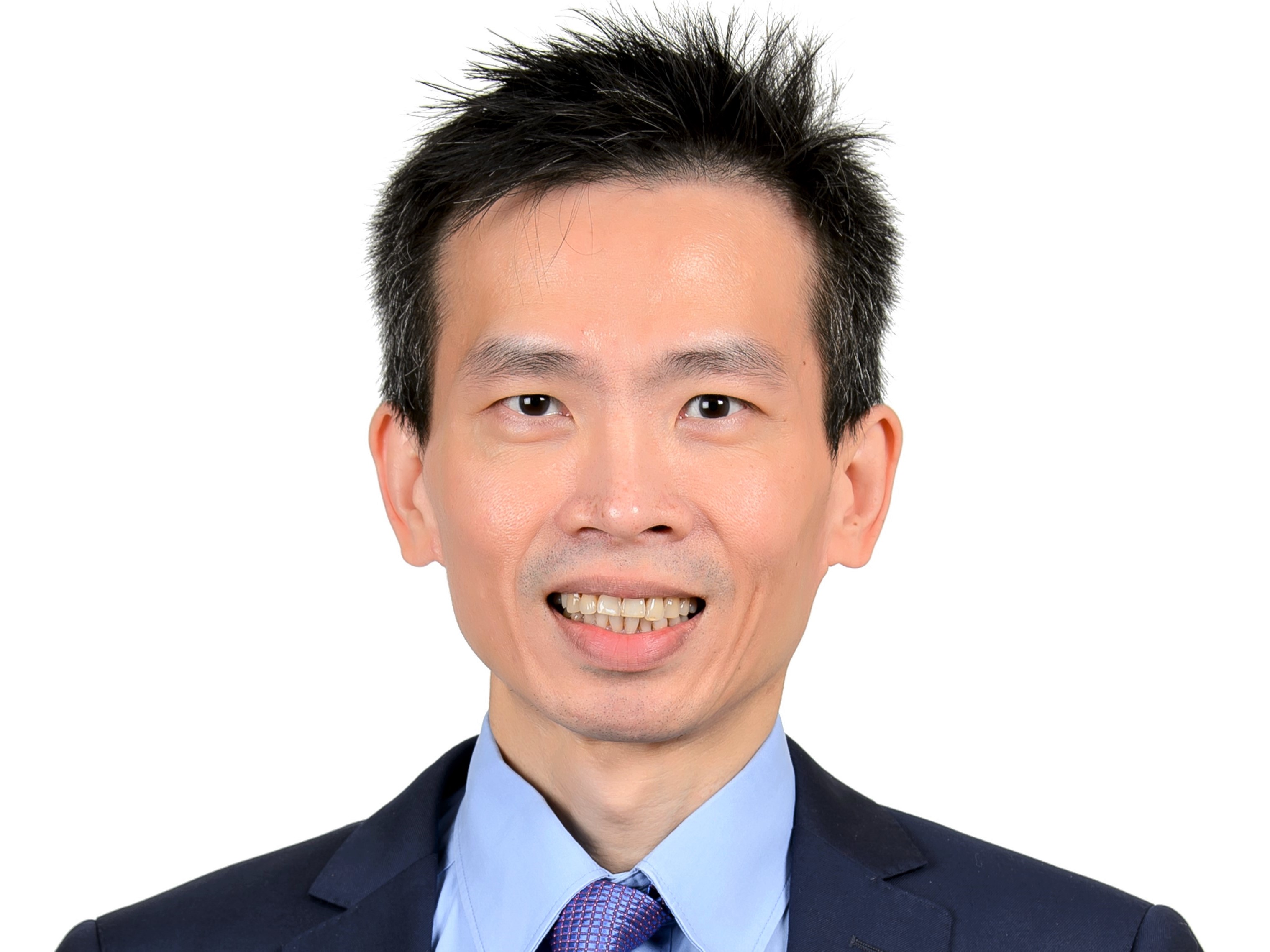
Eng Wei Koo is Keysight’s Director of Standards and Technology, based in Singapore. He represents Keysight in 3GPP RAN plenary and O-RAN ALLIANCE co-chairing the Test and Integration group. Eng Wei has held multiple planning, research, and development leadership positions for RAN development, test and measurements solutions enabling the wireless networks ecosystem to develop, test, deploy and optimize 3G/4G/5G/B5G virtual, Open and AI RAN solutions in the labs and field for the past 20 years. In the recent years, he has been working closely with industry partners to co-innovate and design experimental test beds and methodology for AI-RAN.
______________________________________
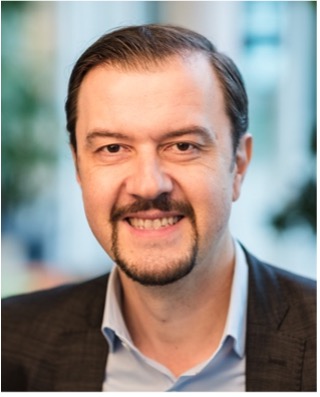
Marko Babovic is a telecom executive and Head of 5G Product Engineering at NEC Europe, bringing more than 27 years of experience in building and scaling global product organizations across the telecom ecosystem.
Based in Sweden, Marko’s role is to complement RAN R&D with global market requirements, operator insights, and customer‑driven perspectives, ensuring alignment between innovation, product strategy, and real‑world deployment needs.
Beyond NEC, Marko plays an active role in shaping the industry. He co‑chairs the O‑RAN ALLIANCE Industry Engagement Focus Group (IEFG) and represents NEC in the AI‑RAN Alliance, supporting collaboration across standards bodies, vendors, and operators.
His previous leadership roles span Ericsson, Mavenir, and Parallel Wireless, covering RAN product management, system engineering, and large‑scale R&D transformation.
______________________________________
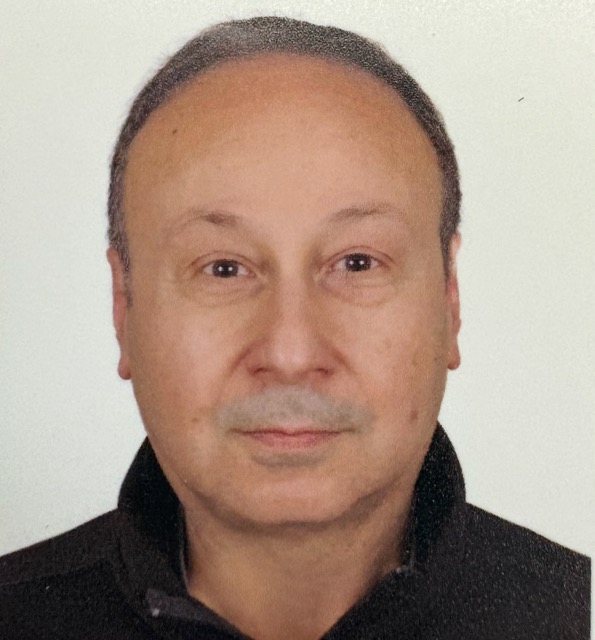
Meet Nader Zein, a pioneering force at NEC Europe whose career has spanned over 25 years of leadership, innovation and dedication.
More about Nader here.
______________________________________

Clifton Fernandes is a seasoned professional with extensive experience in the telecom industry, who has led leading global teams in product development for security, cybersecurity research, security standardization, and product innovation across 4G, 5G, and emerging 6G. Clifton's expertise extends to the fields of security and AIML. In his latest role, Clifton has made significant contributions to the O-RAN (Open Radio Access Network) and 3GPP (3rd Generation Partnership Project) Standards Developing Organizations (SDOs), serving as a rapporteur for security topics. Furthermore, he co-leads the 6G Next Generation Research Group (ngRG) security stream in O-RAN, driving innovation and standardization in the field.
______________________________________

Prof. Hanna Bogucka is a full professor and the Director of the Institute of Radiocommunications at Poznan University of Technology. Moreover, prof. Bogucka is the co-founder, Board Member and the Head of Cooperation of RIMEDO Labs, a spin-off from PUT. Prof. Bogucka is involved in research in radio access networks (RANs): open RAN, RAN security, cognitive radio, and green communication. She has been involved in multiple European 5th – 7th Framework Programme and Horizon 2020 projects, European COST actions, National Science Centre projects, and industry cooperation. She is the author of over 200 research papers, 3 handbooks in radio communications and digital signal processing (in Polish), and 3 scientific monographs on flexible and cognitive radio. Prof. Bogucka has been appointed IEEE Communications Society Director of the EAME Region (Europe, Africa, Middle East), elected ComSoc BoG Member at Large (2023-2025), and elected IEEE Radio Communications Committee Chair (2015-2016). Currently, she is the IEEE ComSoc Chief Marketing Officer, and a member of the Polish Academy of Sciences.
______________________________________
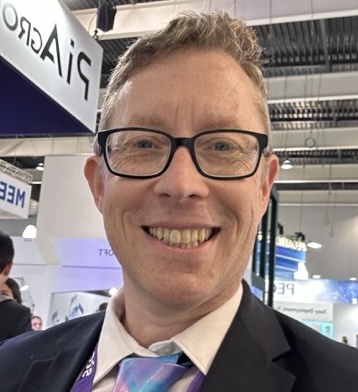
Ben Ash is Senior Sales Director at Radisys UK, where he leads business development across EMEA for Radisys’ 5G mobility software, with a strong focus on Non-Terrestrial Networks (NTN), Open RAN, and advanced radio access solutions. With over 20 years’ experience spanning RAN, RF, and software-defined networking, Ben has worked across public networks, private networks, fixed wireless access, and satellite-enabled use cases. He combines a solid engineering background with a practical, customer-led sales approach, helping operators and partners translate emerging 5G architectures into commercially viable deployments.
______________________________________

Awn Muhammad is Head of Technical Standards at Rakuten Mobile and has over 16 years of experience in mobile networks, specializing in RAN planning, feature development, and standardization. He is an active contributor to the O-RAN ALLIANCE, serving as Co-Chair of the Sustainability Focus Group (SuFG).
______________________________________
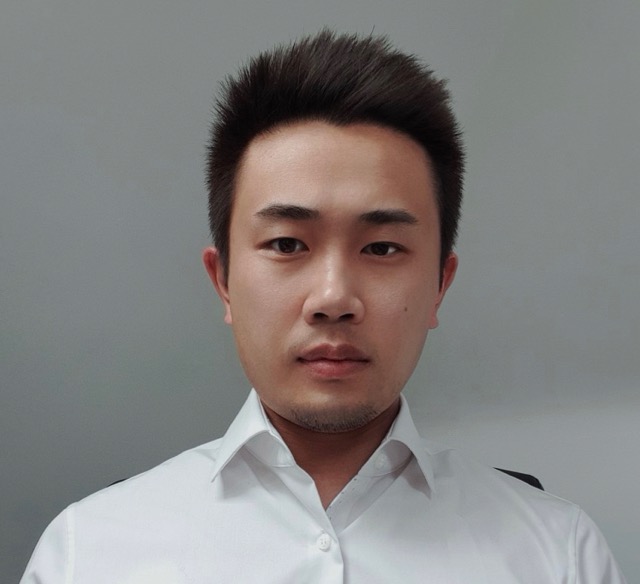
With 15+ years experience in wireless communication technologies, Kexuan Sun brings deep expertise in cutting-edge 5G, 6G and O-RAN technologies. As a Senior Principal Wireless Architect and Standard Lead at Rakuten Symphony's CTO office since June 2022, Kexuan champions innovation by developing advanced system architectures and driving collaborative solutions that align with the company's mission of transforming global telecommunications. Kexuan Sun leads Rakuten Symphony's O-RAN standard team, co-chair O-RAN nGRG RS01 and WG6, and represent Rakuten Symphony as the lead speaker in O-RAN and 3GPP 5GA and 6G workshops. Notable achievements from him also includes initiating and co-chairing the O-RAN’s first 6G workshop in Dallas which was a very successful and inspiring event marking the beginning of O-RAN advancement toward 6G. Kexuan holds an M.Sc. from University College London (UCL) and a B.Eng. from Beijing University of Posts and Telecommunications (BUPT) and Queen Mary University of London (QMUL).
______________________________________
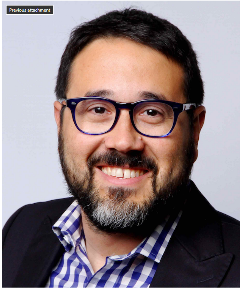
Hanen Garcia is Chief Architect for Telecommunications within the CTO Office at Red Hat. With over 25 years of industry experience, Hanen leads strategic initiatives and architectural frameworks that guide service providers through complex network transformations. He currently serves as a board member for LF Networking, the OpenAirInterface Software Alliance, and the LF Europe Project Sylva. Hanen holds a Master of Engineering in Innovation Management from ÉTS (Canada) and a Master of Engineering in Telecommunications from Polytech Nancy (France).
______________________________________
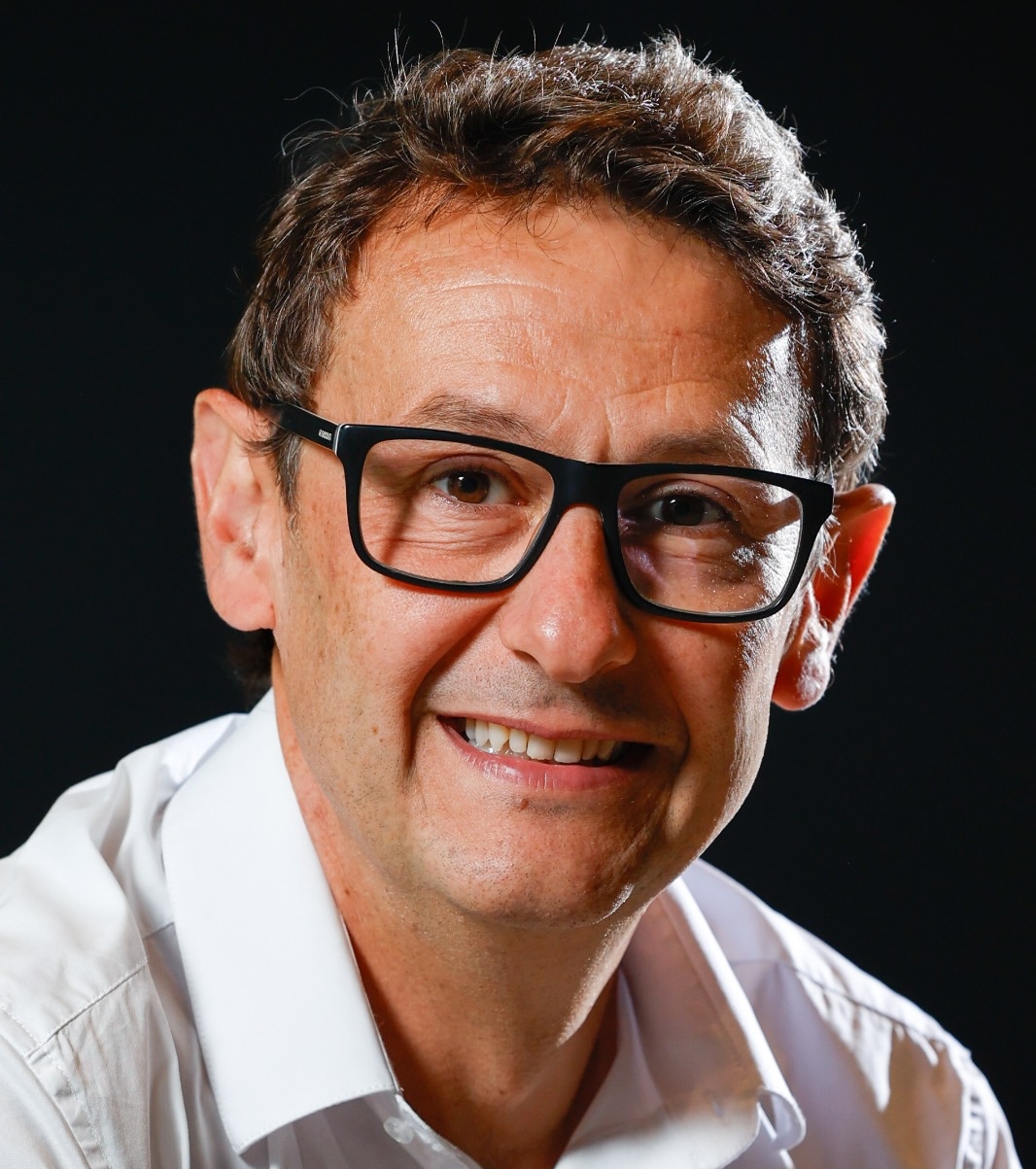
Marco Guadalupi, Telecommunications Engineer from the University of Bologna and Technical Director at Sateliot, has over 20 years of experience in broadband and satellite telecommunications. He leads the technical development of Sateliot’s 5G IoT space architecture. Marco oversees the Tritó satellite generation and the 5G Satellite Development Center in Barcelona, and contributes to 3GPP standards for non-terrestrial networks. He represents Sateliot in the ESA NTN Forum and GSMA 5G IoT and NTN groups.
______________________________________

Joël Grotz is currently with the Future Business and Innovation department at SES, working on direct-to-device (D2D) service developments. Within this role, he is working on satellite system engineering of future satellite constellations planned for SES and on 3GPP 5G-NR NTN related standardization topics.
He was previously responsible for the system architecture of next generation MEO satellite systems (meoSphere) and for IRIS2 system requirements. He was working on resource allocation system of the O3b mPOWER MEO constellation and the SES-17 resource allocation and operational concept. He has worked on specification, definition and development as well as on satellite payload engineering for different satellite programs and on ground segment systems implementation roles within SES for satellite communication projects.
He has worked for the Technical Labs at STEi iDirect formerly Newtec Cy NV in Sint-Niklaas, Belgium on technology development for modems and implementation of satellite modem systems for the Dialog platform and MDM6000 modems among others.
______________________________________
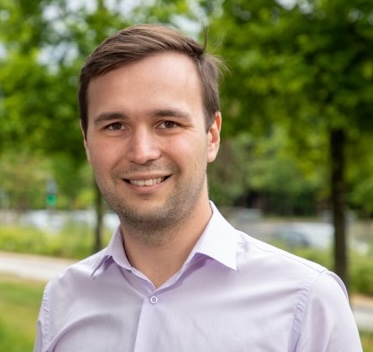
Jevgenij Krivochiza holds the Ph.D. degree in Computer Science from the Interdisciplinary Centre for Security, Reliability, and Trust, University of Luxembourg. He has experience in software-defined radios, digital gateway platforms, DVB-S2X, and 5G NTN systems for LEO, MEO and GEO satellites. He is currently working at SES developing the 5G NR NTN system for better interoperability and agility in the future satellite constellation.
______________________________________

Bert Van der Linden is a Senior Principal Product Manager at ST Engineering iDirect, specializing in end-to-end satellite communication systems and 5G non-terrestrial networks (NTN). In this role, he leads the product strategy for 5G NTN Satcom across RAN and UE, and has driven the virtualization and digitization strategy for the iDirect Intuition ground system. His work focuses on the design of next-generation space communication systems, leading multi-partner architecture initiatives, and contributing to NTN standardization efforts across industry bodies such as GSMA and 3GPP. Through this work, Bert bridges technical innovation across large-scale industrial programs and research collaborations, while providing a forward-looking perspective on the evolution of the satcom market and the critical role of iDirect’s advanced networking ground systems.
Prior to joining ST Engineering iDirect, Bert spent many years at Cisco, where he was responsible for go-to-market strategy, product development, and service delivery for Cloud SaaS solutions covering video processing technologies, software, gateway control, and CPE equipment. During his time at Cisco, and previously at Siemens, he built extensive experience in end-to-end system solutions for the telecommunications industry.
Bert holds a Master’s degree in Telecommunications from Siemens’ Master’s Program in Munich and a Master’s degree in Industrial Electronic Engineering from KaHo Sint Lieven.
______________________________________

He holds a degree in Physics from the University of Bari and a PhD in Mathematical Models for Engineering, Electromagnetism, and Nanoscience, specializing in Electromagnetism, from the University of Rome "Sapienza." He is formally "Satellite Communications Systems Expert" and holds the INCOSE certification as a professional systems engineer (CSEP).
At Thales Alenia Space Italia S.p.A., he is Head of the Research and Development Department in the Italian Telecommunications Domain (DTI), managing and coordinating various projects and studies with international (ESA, EC) and national (ASI, MIUR, and others) Institutions.
He is currently engaged in the development and implementation of innovative technologies for space systems and applications in line with the space economy ecosystem, contributing to this goal. These technologies cover various technical areas such as optics/photonics, intelligent and on-board antenna processing technologies, the 5G NTN/6G protocol, cybersecurity and post-quantum cryptography (PQC), and artificial intelligence applied to satellite communications and other space areas. The goal is to contribute to the development of technologies for the implementation of space networks (abbreviated to SpaceNet) seamlessly and transparently integrated with terrestrial networks for end users.
______________________________________

Raphaël Ihamouine is a Principal Systems Architect at Viasat, specialized in end-to-end satellite communication systems and 4G/5G non-terrestrial networks (NTN). His work focuses on next-generation space communication systems design, leading multi-partner architecture efforts and contributing to NTN standardization such as in GSMA and 3GPP. Based in the Netherlands, Raphaël’s work bridges technical innovation across industrial programs and research collaborations.
______________________________________

Dr. Ian C. Wong is currently the Senior Director of RF and Wireless Architecture reporting to the CTO at VIAVI Solutions, where he is leading RF and wireless technology strategy, architectures, and standards. He is the co-chair of the Test and Integration Focus Group (TIFG) in the O-RAN Alliance, and VIAVI’s representative at the full member and steering groups of the NextG Alliance. He is also Chief Architect of the VIAVI Automated Lab-as-a-Service for Open RAN (VALOR) which was awarded $21.7M by the NTIA Public Wireless Supply Chain Innovation Fund’s first Notice of Funding Opportunity.
From 2009 – Aug 2020, he was with NI (formerly National Instruments, since acquired by Emerson) where his last position was Section Manager of Wireless Systems R&D where he led the development of real-time end-to-end 5G wireless test and prototyping systems, and managed the company’s 3GPP wireless standards and IP strategy. From 2007-2009, he was a systems research and standards engineer with Freescale Semiconductor where he represented Freescale in the 3GPP LTE standardization efforts. He is a senior member of the IEEE, was the Director of Industry Communities for IEEE Communications Society 2016-2019, and was the Industry Program Chair for IEEE Globecom 2014 in Austin.
Dr. Wong is lead editor of the book “Open RAN: The Definitive Guide” published by Wiley/IEEE in 2023, co-authored the book “Resource Allocation for Multiuser Multicarrier Wireless Systems” published by Springer, numerous patents, standards contributions, and IEEE journal and conference publications. He was awarded the Texas Telecommunications Engineering Consortium Fellowship in 2003-2004, and the Wireless Networking and Communications Group student leadership award in 2007.
He received the MS and PhD degrees in electrical engineering from the University of Texas at Austin in 2004 and 2007, respectively, and a BS degree in electronics and communications engineering (magna cum laude) from the University of the Philippines in 2000.
Join us for an outstanding workshop, elaborating on 5G to 6G topics, with a focus on O-RAN Enabling NTN Deployments – Exploring Opportunities and Synergies.
It is composed of 2 parts:
Maria Guta, Senior 5G/6G Satcom Solutions Architect in the 5G/6G NTN Programme Office, Directorate of Connectivity and Secure Communications in the European Space Agency (ESA)
This keynote adresses the boundaries, priorities and the emerging gaps. It presents network/system optimisations - space segment optimisations. It discusses experimentations perspectives and associated roadmap.
Stefan Draškoci, 5G NTN Lead, Aalyria Technologies
Once deployed in space, 5G NTN constellations face a difficult multivariate resource optimisation challenge, whereby finite resources such as time, space, frequency, beam, power, etc. will need to be allocated to deliver connectivity to end users, at times even in coordination with 5G Terrestrial Networks. This presentation will describe the reasons and ways in which the O-RAN RIC/SMO framework is best suited to be the driver of this continuous optimisation and orchestration.
Olivier Hauw, Fast Track Leader Connectivity, Airbus
This presentation will explore how 5G TN/NTN can be considered as the most promising next step for the aviation connectivity and may help induce aviation industry digital transformation.
Ben Ash, Senior Sales Director, Radisys
This presentation focuses on building NTN solutions leveraging 3GPP and O-RAN architecture and the key role of the broader satellite communications ecosystem. It also talks about deployment aspects including hardware and cloud platforms, compute and power constraints, NTN RAN adaptations, orchestration/ control and TN/NTN integration. Presents a view of evolution of NTN solutions.
Eng Wei Koo, Director of Standards and Technology, Keysight Technologies
Space to Earth communications industry trends with Direct-to-Cell/Device (D2C/D2D) connectivity rise to prominence; AI-enabled Non-Terrestrial Networks (NTN) – overview of 5G towards 6G standardization activities in 3GPP and O-RAN ALLIANCE, identify unique design and deployment challenges; share “Space to Lab” methodology which involves digital twin assisted replication and reproduction of real-world space to earth communications conditions in the lab testing environment thereby accelerating NTN commercial deployments.
Kexuan Sun, Senior Principal Wireless Architect, Rakuten Symphony, CTO Office
Awn Muhammad, Head of Technical Standards, Rakuten Mobile
This presentation will cover:
1. Rakuten's strategy and achievement on NTN business.
2. NTN use cases, architecture evolution and standardization.
3. Opportunities and potential solutions with O-RAN including RIC for NTN in 5GA and 6G Era.
Dr. Jevgenij Krivochiza, Engineer, Digital Ground Development, SES S.A.
The presentation covers a hand-on experience of testing NR NTN over legacy GEO and MEO transparent payload satellites. It shows how satellites ephemeris is used to command the timing advance and how to deal with the timing uncertainties in practice.
Dr.-Ing. Markus Breitbach, Senior Expert, Deutsche Telekom Group Technology
Unlike terrestrial network sites, LEO satellites are moving. The presentation examines the mobility of NTN infrastructure and its impact on radio network and transport network functions, highlighting the opportunities this presents for the integration of satellites in terrestrial networks and for seamless service continuity.
RaviKanth Pasumarthy, Vice President and Chief Architect, Capgemini Engineering
As part of 3GPP Rel-17 and beyond there is also evolution to support Satellite networks (NTN) also based on 5G network architecture. Ubiquitous networks based on TN, NTN (and HAPS) is also aligned as one of the visions for 6G based Network architecture. The presentation captures the System solution and architecture considerations to be taken in developing NTN solutions aligned with O-RAN architecture. It shall also provides details of the challenges in realizing the same and guidelines to be considered in addressing the challenges.
Dr. Ian C. Wong, Senior Director of RF and Wireless Architecture, VIAVI Solutions
5G/6G non‑terrestrial networks (NTN) present unique challenges around ensuring QoS, application performance, and stability across orbital variations and UE types. VIAVI’s non‑terrestrial network (NTN) digital twin test solutions addresses these challenges, enabling end-to-end emulation of satellites and NTN access —from component integration to full RAN and core scenarios—covering GEO, MEO, LEO, and HAPS orbits under realistic doppler, delay, and mobility conditions.
Raphaël Ihamouine, Principal Systems Architect at Viasat
This presentation will provide a short, motivation-driven overview on O-RAN related NTN operations from Viasat perspective. Viasat will highlight key operational and control considerations relevant to its NTN deployments, such as convergence considerations, end-to-end intent, control and policy alignment and resource sharing in NTN deployments. The intention behind this presentation would be to share practical NTN use-cases and a satellite operator perspective to the O-RAN discussions.
José Luis Alcolea Coronel, 5G Strategy Manager, Hispasat
This session will cover how the NTN sector will be able to build its infrastructure based on the dynamic ecosystem created and boosted by O-RAN ALLIANCE.
Bert van der Linden, Senior Principal Product Manager, Hub Solutions / 5G NTN Satcom Convergence, ST iDirect
In this session, a senior product manager from ST Engineering iDirect will unpack iDirect’s strategy of integrating 5G Non-Terrestrial Networks into the global telecoms landscape. It highlights iDirect’s cloud-native Intuition ground system which bridge satellite and terrestrial networks through standards-based 3GPP compliance. Attendees will gain insights how software-based 5G NTN radio access technologies and optimized network design enable native 3GPP access over satellite links while ensuring interoperability, expanded coverage, and optimized spectral efficiency. The session will also explore iDirect’s strategic partnership with Capgemini emphasizing their joint development of a satellite-optimized gNodeB base station.
Key takeaways include:
Panel discussion featuring
Nader Zein, Chief Engineer – SatCom Standardisation Lead, NLE - NEC Europe
The presentation is about our NEC 2030 Vision and plan to build Space Digital Infrastructure (SDI) by establishing optical communication networks in space. The presentation summarises NEC activities in its ongoing projects to solve the technical challenges necessary for constructing communication satellite constellations and introduce the space communication technologies currently under development by NEC.
Marco Guadalupi, Telecommunications Engineer from the University of Bologna and Technical Director at Sateliot
Moving beyond simulations, this session presents field results from a live end-to-end integration of a Non-Terrestrial Network with a Tier-1 Mobile Network Operator. We will discuss the practical implementation of interfaces to enable standard NB-IoT connectivity on commercial user equipment, demonstrating the ecosystem’s readiness for mass deployment.
Vincenzo Schena, Head of the R&D Department in the ItalianTelecommunications Domain (DTI), Thales Alenia Space Italia
The presentation focuses on the ongoing activities at Thales Alenia Spazio Italia (TAS-I) in the field of 5G NTN for space. In particular, the results of several ongoing projects with ESA will be described.
Daniele Finocchiaro, Head of R&D and Technology Roadmap, Eutelsat
This presentation will discuss, from the perspective of a satellite operator, the path from legacy systems and standards towards 3GPP; the current activities promoting the adoption of 5G-NTN; and some indications on the way forward for 6G.
Prof. Geoffrey Li, IEEE Fellow, RAE Fellow, Chair in Wireless Systems, Imperial College London, UK
Since our initial work applied deep learning (DL) for joint channel estimation and signal detection in OFDM communications around 10 years ago, tremendous research has been performed in the related area. This talk provides a brief overview on DL for wireless communications in the past 10 years, including DL for physical layer processing, DL for resource allocation, semantic communications, federated learning, and few-shot learning for wireless communications. At the end, we also discuss issues on standardization of DL-enabled wireless communications.
Prof. Hanna Bogucka, Director of the Institute of Radiocommunications, Poznan University of Technology, Poland
The architecture of the prospective 6G network will be almost entirely virtualized and based on software functionalities. These virtualization trends extend from the core to the Radio Access Network (RAN) functionalities. The open specification of the radio interface (O-RAN) and intelligent RAN (AI-RAN) enable higher cost efficiency, transparency, and security. Artificial Intelligence (AI) and Machine Learning (ML) algorithms are planned to reside in near-real-time (RT) Radio Intelligent Controller (RIC) and non-RT RIC, creating significant opportunities to automate RAN operations. However, these additional functions, embedded AI, open interfaces, and virtualization pose challenges regarding communication security, algorithmic cybersecurity, and the privacy of collected data. On the other hand, open architecture with embedded AI enables specialized applications to continuously monitor and analyze security threats, thereby protecting the RAN from malicious and unauthorized access to network segments and from AI-supported attacks on AI algorithms. These opportunities and challenges will be discussed, with examples provided.
Prof. Ashutosh Dutta, Chair of ECE EP, Johns Hopkins University; Chief 5G strategist of APL; Co-chair of IEEE Future Networks
Dr. Emilio Calvanese Strinati, CEA-Leti, France
This talk will survey breakthroughs and trends in AI-enabled semantic communications for 6G and beyond. Unlike 5G systems, which focus on transporting raw data reliably without asking whether every bit is useful, semantic communications targets what matters for the receiver’s goal. The guiding principle is sharing less while understanding more. By prioritizing relevance and meaning, semantic communications can improve efficiency while helping AI agents make better decisions and reason about cause and effect.
The talk first clarifies what semantic communications is (and is not), introducing goal-oriented transmission, meaning-aware reliability, and shared context. It then explains why semantics matters for open, software-driven radio access networks: as automation increases and data flows grow, semantic methods can reduce unnecessary exchange and make optimization more robust.
We then show how semantic communications layers—semantic representation, meaning-aware transmission, and semantic decision/control—map to existing network intelligence loops. We discuss practical integration points: deploying some functions close to the radio for fast decisions, placing others in near-real-time optimization applications, and reserving long-horizon learning and policy for higher-level orchestration. We also outline what the network must provide to make this deployable: consistent semantic measurements, safe management and updating of learned models, and observability to measure and trust gains.
Finally, we position semantic performance indicators within these loops—what must be computed locally for very fast actions, what can be handled in near-real-time optimization, and what belongs to longer-term analytics and governance. The talk closes with challenges and research directions, drawing insights from EU 6G-GOALS, 6G-DISAC, and 6G-ARROW.
Dr. Ulrich Dropmann, Head of Standardization and Ecosystem Engagement, Nokia, Germany
The active 6G standardization has started in 2025, with key events marking the O-RAN / 3GPP workshop in April 2025 and the 3GPP kick-off workshop that preceded in March. The O-RAN-3GPP workshop agreement laid a great foundation to a successful standardization to bring the O-RAN Alliance 6G vision to life. We highlight some key status as of February 2026, priorities and discussions, with emphasis on enabling AI-native 6G and capturing value of 6G.
Mr. Hanen Garcia, Chief Architect, Telecommunications, CTO Office, Red Hat, Spain
This session explores the transition toward 6G AI-Native infrastructure, where cognitive capabilities are embedded directly into the network to enable autonomous operations. We will discuss the practicalities of deploying Large Language Models (LLMs) at scale to support 6G requirements.
Riikka Susitaival, Manager for Network Automation, Ericsson
As the telecom industry is starting to work on 6G, our society as well as IT industry is dramatically changing due to introduction of AI tools and capabilities. Eventually, this trend will also impact standardization of 6G. In this presentation, we discuss how AI impacts mobile networks, what the role of agentic AI is, and how to achieve a sustainable and manageable network architecture that leverages current technologies without limiting the potential for future innovation.
Mr. Clifton Fernandes, Security Expert, Nokia, UK
The importance of 6G is gaining rapid prominence with nations and societies soon going to depend on this. As the importance and technology grows, so does the exposure to malicious actors seeking to exploit vulnerabilities. An unprecedented threat landscape is emerging, driven by a non-exhaustive set of factors including the anticipated rapid proliferation of connected devices, the surge of new digital services, the rise of AI and agentic communication, the expanding API economy, sophisticated cyberattacks to name a few.
Nokia is committed to creating networks with security, privacy, and trust enabled by design from the very beginning of 6G. In the future AI-native networks will only be successful and deliver on their promise if appropriate safeguards and measurements are defined, applied and continuously ensured. The speaker will derive insights and lessons learnt from earlier generations, identify what strategy can be applied and improved in 6G and will also review the status of security standardization efforts and alignment. Nokia considers a list of important security study areas for 6G and topics that will potentially have the greatest impact like Post-Quantum Cryptography (PQC), AI native security, Radio lower layer protection.
In this talk the speaker portrays Nokia’s ambition to design the most cyber-resilient and secure network for 6G from day 1.
Dr. Maria Guta is Senior 5G/6G Satcom Solutions Architect in the 5G/6G NTN Programme Office, Directorate of Connectivity and Secure Communications in the European Space Agency (ESA). Prepares and implements initiatives for 5G/6G satellite solutions fostering the integration of satellite and terrestrial solutions within the 5G/6G and for various verticals. Interfaces with external stakeholders - space and non-space organizations, national space agencies and EU to develop common understanding for the requirements for 5G/6G satellite networks. Leads the ESA hosted NTN-Forum and follows ESA support actions for standardization. She has more than 20 years of experience in satcom field. In her previous positions, she was with Eutelsat (FR) in the Systems Studies Division and the Space Engineering SpA (IT) in the Telecom Programmes Division.
______________________________________
Geoffrey Ye Li, FREng (Fellow of Royal Academic of Engineering) and Fellow of IEEE, is a Chair Professor at Imperial College London, UK. Before joining Imperial in 2020, he was a Professor at Georgia Institute of Technology, USA, for 20 years and a Principal Technical Staff Member with AT&T Labs – Research (previous Bell Labs), USA, for five years. He introduced deep learning to wireless communications around 10 years ago, which has become a popular research area now. He made fundamental contributions to orthogonal frequency division multiplexing (OFDM) for wireless communications, which made him win 2024 IEEE Eric E. Sumner Technical-Field Award. He also won several awards from IEEE Signal Processing, Vehicular Technology, and Communications Societies, including 2019 IEEE ComSoc Edwin Howard Armstrong Achievement Award.
______________________________________
Dr. Dropmann heads the external standardization engagement for Nokia. He is responsible for global and regional standardization including radio spectrum aspects. Ulrich is a Vice President and Executive Committee member of the Global Mobile Supplier Association (GSA). He also serves in the Board of the Metaverse Standards Forum. Between 2022 and 2024, he served as a board member to the Innovative Optical and Wireless Network Global Forum (IOWN-GF). From 2018 to 2022 he was also Board Member of the 5G Association for Connected Industries and Automation (5G-ACIA).
Prior to his current role Ulrich was responsible for Nokia Networks Industry Environment activities. Between 2007 and 2012 Ulrich lead the NSN 3GPP standardization team and has served as Head of Delegation to 3GPP. Between 1996 and 2007, Ulrich held various positions in R&D of Siemens Mobile Networks unit. He was responsible for standardization activities of the core network business unit and managed Siemens 3GPP activities. Ulrich had instrumental role in the definition of the UMTS architecture as well as in set up of project management in 3GPP.
Ulrich holds a Ph.D. from Télécom ParisTech from 1996; his research area was the definition of 3G Radio Interface and his research was part of EU collaborative research program (RACE II ATDMA). He holds a Master Degree (Dipl-Ing) in Telecommunication from the RWTH, Aachen from 1992.
Luca works as a Staff Network Architect at Aalyria Technologies Spacetime division, acting as a Chief Architect for Aalyria's Non-Terrestrial Networks (NTN) and Direct-to-cell/Direct-to-device activities. He specializes in new technology development around 4G/5G/B5G and future 6G in both Terrestrial and Non-Terrestrial Networks (NTN).
Luca comes from a position as Principal Systems Architect at Viasat (previously Inmarsat), with 8 years of experience in System Architecture and Engineering working on various projects, including end-to-end architecture and product requirements for Viasat's NTN and Direct-to-device programmes.
Luca also acts as Aalyria's lead delegate in 3GPP, and co-chair of the ESA NTN Forum Working Group 2 on Vertical Requirements, and was previously lead of mobile standards at Viasat across 3GPP, GSOA, GSMA, GCF and SSIG.
______________________________________
Stefan Draškoci is the 5G NTN Lead for Aalyria Technologies in the UK. He holds a BEng in Electronic Engineering from King’s College London, and has been working in the field of 5G RAN optimisation for the past 6 years. He is the rapporteur for the first NTN-focused Feature Plan in the O-RAN Alliance which is defining in detail the use cases and opportunities for NTN and TN/NTN optimisation, resulting in enhancements to the O-RAN architecture and constituent management interfaces. In Aalyria, he is responsible for architecting and implementing these optimisation capabilities in Aalyria's Spacetime platform, the first fully fledged NTN-capable RAN Intelligence Controller.
______________________________________
Dr. Emilio Calvanese Strinati is Scientific & Innovation Director of Smart Devices, Telecommunications at CEA‑Leti, where he leads future wireless/6G research programs. He received his M.Eng, (2001, Univ. La Sapienza Roma), PhD (2025, Telecom ParisTech, Paris) on telecommunication engineering, he has published over 200 papers and book chapters and co-invented 100+ patents. He was the general chair if EUCNC in 2022 and he organized 50+ international workshops and special sessions (at EUCNC, Globecom, ICC, VTC, etc.). He has coordinated six European projects: 5G-CHAMPIONS, 5GAllstar, RISE-6G, 6G-GOALS, 6G-DISAC and 6G-ARROW. His current research interests are on AI applied to 5G/6G, RIS, ISAC, Semantic and goal-oriented communications.
______________________________________
Christian Calamarte, UpNext SpaceRAN Demonstrator Technical Manager, Airbus
Christian Calamarte leads the technical activities for the Airbus UpNext SpaceRAN demonstrator, which focuses on testing 5G NTN solutions. Following 20 years with Airbus Defence & Space working on commercial and military satellite communication systems (GEO and NGSO), Christian joined Airbus UpNext to develop a complete 5G NTN demonstrator. This project aims to test new technologies and collaborative frameworks alongside key technical partners from O-RAN Alliance.
______________________________________
Olivier Hauw is the Airbus Fast Track Leader Connectivity, reporting to the Airbus CTO.
Olivier is building the overall Airbus cross-division strategy linked to the development of connectivity solutions. In that frame, Olivier is in charge of steering all the relevant activities while fostering synergies cross-division.
Over the past 30 years, Olivier has been working in the telecommunications industry. He has been leading the Satellite Communication Services business for Government customers including Operations and Solutions. He was also in charge of managing the relationship with all Satellite Network Operators for the group. Prior to this, Olivier held various roles in programs for Institutional and private customers as well as for the A380 development in Airbus Commercial Aircraft.
Olivier joined Airbus after completing a master degree in Computer Science and Telecommunication at the Institut National Polytechnique (N7) in Toulouse, France.
______________________________________
RaviKanth is working as Vice President at Capgemini Engineering and in his role as Chief Architect, is driving the System architecture, Solution design and offerings in the areas of 5G/5G-Advanced RAN and NTN/Satellite Networks, modelling of TN/NTN network architecture and realization approaches based on O-RAN based architecture.
Ravi is IEEE Senior Member and is also active speaker speaking on 5G-Advanced/6G and NTN related topics in various workshops/conferences.
______________________________________
Dr.-Ing. Markus Breitbach is a Senior Expert in Deutsche Telekom’s Group Technology, working in the area of end-to-end network architecture with a background in radio networks. Before he joined Deutsche Telekom in 2006, he has been with a major infrastructure supplier as UMTS/HSPA Radio Systems Engineer. In Deutsche Telekom, he has been working on network virtualization and campus networks. Currently he is engaged in Deutsche Telekom’s NTN activities and has coordinated the 6G-TakeOff project. His ambition is to design innovative network concepts that fit well into the surrounding ecosystem and business picture.
______________________________________
Riikka Susitaival is working as a manager for network automation, coordinating Ericsson standardisation activities across different standardisation organisations like 3GPP, O-RAN and TM Forum. She received her M.sc. and Ph.D degrees in electrical and telecommunications engineering from Helsinki University of Technology in 2002 and 2007, respectively. Her major in both degrees was teletraffic theory. She joined Ericsson in 2007 and has worked with research and standardization in the area of wireless access networks over 18 years. She has worked as head of Ericsson 3GPP RAN2 delegation and was active contributor for creating 3GPP NR specifications. She has also coordinated Ericsson 3GPP RAN level topics across RAN working groups.
______________________________________
Dr. Daniele Finocchiaro is responsible for Telecom R&D and Projects in the Engineering Department of Eutelsat. He holds a Ph.D. in Computer Science and he has a long experience in the development of new satellite technologies and services. His current activities include standardization and development of 5G on satellite networks.
______________________________________
José Luis serves as Hispasat's 5G Strategy Manager. In this role, he is driving the development of the 5G connectivity strategy and leading initiatives that capitalize on emerging market opportunities.
He plays an active role in shaping the international 5G NTN landscape as a member of the NTN Forum Steering Board and as a 3GPP delegate, contributing to global standardization efforts.
A Telecommunications Engineer with nearly two decades of experience. He has worked across multiple segments of the industry, including engineering companies, consulting firms, utilities, telco vendors, and mobile network operators (MNOs). His responsibilities have spanned strategy, innovation, design, deployment, and both pre-sales and post-sales activities. In addition to his extensive technical expertise in 5G mobile communications, he brings a comprehensive understanding of commercial trends in both terrestrial and satellite telecommunications.
______________________________________
As a Technical Leader in 5G and security, IEEE Fellow Ashutosh Dutta has been serving as the founding Co-Chair for the IEEE Future Networks Initiative that focuses on 5G standardization, education, publications, testbed, and roadmap activities. Ashutosh currently works as Chief 5G Strategist and Fellow at Johns Hopkins University Applied Physics Labs and Chair of Electrical and Computer Engineering for Engineering Professional Program at JHU. Earlier Ashutosh worked as Director of Technology Security at AT&T, CTO for NIKSUN, Senior Scientist in Telcordia Research, Director of Central Research Facility at Columbia University and Computer Engineer at TATA Motors. Ashutosh is the author of more than 100 technical papers and 31 issued patents. Ashutosh is co-author of the book, titled, “Mobility Protocols and Handover Optimization: Design, Evaluation and Application” published by Wiley-IEEE press. Ashutosh currently serves as the founding co-chair for IEEE Future Networks Initiative and Member-At-Large for IEEE Communications Society, where was a Distinguished Lecturer for 2017-2020. He co-founded the IEEE STEM conference (ISEC) and helped to implement EPICS (Engineering Projects in Community Service) projects in several high schools. Ashutosh has served as the general Co-Chair for the IEEE STEM conference for the last 10 years, as well as the Director of Industry Outreach for IEEE Communications Society from 2014-2019. He has served as the general Co-Chair for the premier IEEE 5G World Forums and has organized 80 5G World Summits around the world. Ashutosh currently serves as the Chair for IEEE Industry Connection’s O-RAN activities. Ashutosh is a Distinguished Alumnus of NIT Rourkela with BS in Electrical Engineering, MS in Computer Science from NJIT, and Ph.D. in Electrical Engineering from Columbia University under the supervision of Prof. Henning Schulzrinne.
______________________________________
Eng Wei Koo is Keysight’s Director of Standards and Technology, based in Singapore. He represents Keysight in 3GPP RAN plenary and O-RAN ALLIANCE co-chairing the Test and Integration group. Eng Wei has held multiple planning, research, and development leadership positions for RAN development, test and measurements solutions enabling the wireless networks ecosystem to develop, test, deploy and optimize 3G/4G/5G/B5G virtual, Open and AI RAN solutions in the labs and field for the past 20 years. In the recent years, he has been working closely with industry partners to co-innovate and design experimental test beds and methodology for AI-RAN.
______________________________________
Marko Babovic is a telecom executive and Head of 5G Product Engineering at NEC Europe, bringing more than 27 years of experience in building and scaling global product organizations across the telecom ecosystem.
Based in Sweden, Marko’s role is to complement RAN R&D with global market requirements, operator insights, and customer‑driven perspectives, ensuring alignment between innovation, product strategy, and real‑world deployment needs.
Beyond NEC, Marko plays an active role in shaping the industry. He co‑chairs the O‑RAN ALLIANCE Industry Engagement Focus Group (IEFG) and represents NEC in the AI‑RAN Alliance, supporting collaboration across standards bodies, vendors, and operators.
His previous leadership roles span Ericsson, Mavenir, and Parallel Wireless, covering RAN product management, system engineering, and large‑scale R&D transformation.
______________________________________
Meet Nader Zein, a pioneering force at NEC Europe whose career has spanned over 25 years of leadership, innovation and dedication.
More about Nader here.
______________________________________
Clifton Fernandes is a seasoned professional with extensive experience in the telecom industry, who has led leading global teams in product development for security, cybersecurity research, security standardization, and product innovation across 4G, 5G, and emerging 6G. Clifton's expertise extends to the fields of security and AIML. In his latest role, Clifton has made significant contributions to the O-RAN (Open Radio Access Network) and 3GPP (3rd Generation Partnership Project) Standards Developing Organizations (SDOs), serving as a rapporteur for security topics. Furthermore, he co-leads the 6G Next Generation Research Group (ngRG) security stream in O-RAN, driving innovation and standardization in the field.
______________________________________
Prof. Hanna Bogucka is a full professor and the Director of the Institute of Radiocommunications at Poznan University of Technology. Moreover, prof. Bogucka is the co-founder, Board Member and the Head of Cooperation of RIMEDO Labs, a spin-off from PUT. Prof. Bogucka is involved in research in radio access networks (RANs): open RAN, RAN security, cognitive radio, and green communication. She has been involved in multiple European 5th – 7th Framework Programme and Horizon 2020 projects, European COST actions, National Science Centre projects, and industry cooperation. She is the author of over 200 research papers, 3 handbooks in radio communications and digital signal processing (in Polish), and 3 scientific monographs on flexible and cognitive radio. Prof. Bogucka has been appointed IEEE Communications Society Director of the EAME Region (Europe, Africa, Middle East), elected ComSoc BoG Member at Large (2023-2025), and elected IEEE Radio Communications Committee Chair (2015-2016). Currently, she is the IEEE ComSoc Chief Marketing Officer, and a member of the Polish Academy of Sciences.
______________________________________
Ben Ash is Senior Sales Director at Radisys UK, where he leads business development across EMEA for Radisys’ 5G mobility software, with a strong focus on Non-Terrestrial Networks (NTN), Open RAN, and advanced radio access solutions. With over 20 years’ experience spanning RAN, RF, and software-defined networking, Ben has worked across public networks, private networks, fixed wireless access, and satellite-enabled use cases. He combines a solid engineering background with a practical, customer-led sales approach, helping operators and partners translate emerging 5G architectures into commercially viable deployments.
______________________________________
Awn Muhammad is Head of Technical Standards at Rakuten Mobile and has over 16 years of experience in mobile networks, specializing in RAN planning, feature development, and standardization. He is an active contributor to the O-RAN ALLIANCE, serving as Co-Chair of the Sustainability Focus Group (SuFG).
______________________________________
With 15+ years experience in wireless communication technologies, Kexuan Sun brings deep expertise in cutting-edge 5G, 6G and O-RAN technologies. As a Senior Principal Wireless Architect and Standard Lead at Rakuten Symphony's CTO office since June 2022, Kexuan champions innovation by developing advanced system architectures and driving collaborative solutions that align with the company's mission of transforming global telecommunications. Kexuan Sun leads Rakuten Symphony's O-RAN standard team, co-chair O-RAN nGRG RS01 and WG6, and represent Rakuten Symphony as the lead speaker in O-RAN and 3GPP 5GA and 6G workshops. Notable achievements from him also includes initiating and co-chairing the O-RAN’s first 6G workshop in Dallas which was a very successful and inspiring event marking the beginning of O-RAN advancement toward 6G. Kexuan holds an M.Sc. from University College London (UCL) and a B.Eng. from Beijing University of Posts and Telecommunications (BUPT) and Queen Mary University of London (QMUL).
______________________________________
Hanen Garcia is Chief Architect for Telecommunications within the CTO Office at Red Hat. With over 25 years of industry experience, Hanen leads strategic initiatives and architectural frameworks that guide service providers through complex network transformations. He currently serves as a board member for LF Networking, the OpenAirInterface Software Alliance, and the LF Europe Project Sylva. Hanen holds a Master of Engineering in Innovation Management from ÉTS (Canada) and a Master of Engineering in Telecommunications from Polytech Nancy (France).
______________________________________
Marco Guadalupi, Telecommunications Engineer from the University of Bologna and Technical Director at Sateliot, has over 20 years of experience in broadband and satellite telecommunications. He leads the technical development of Sateliot’s 5G IoT space architecture. Marco oversees the Tritó satellite generation and the 5G Satellite Development Center in Barcelona, and contributes to 3GPP standards for non-terrestrial networks. He represents Sateliot in the ESA NTN Forum and GSMA 5G IoT and NTN groups.
______________________________________
Joël Grotz is currently with the Future Business and Innovation department at SES, working on direct-to-device (D2D) service developments. Within this role, he is working on satellite system engineering of future satellite constellations planned for SES and on 3GPP 5G-NR NTN related standardization topics.
He was previously responsible for the system architecture of next generation MEO satellite systems (meoSphere) and for IRIS2 system requirements. He was working on resource allocation system of the O3b mPOWER MEO constellation and the SES-17 resource allocation and operational concept. He has worked on specification, definition and development as well as on satellite payload engineering for different satellite programs and on ground segment systems implementation roles within SES for satellite communication projects.
He has worked for the Technical Labs at STEi iDirect formerly Newtec Cy NV in Sint-Niklaas, Belgium on technology development for modems and implementation of satellite modem systems for the Dialog platform and MDM6000 modems among others.
______________________________________
Jevgenij Krivochiza holds the Ph.D. degree in Computer Science from the Interdisciplinary Centre for Security, Reliability, and Trust, University of Luxembourg. He has experience in software-defined radios, digital gateway platforms, DVB-S2X, and 5G NTN systems for LEO, MEO and GEO satellites. He is currently working at SES developing the 5G NR NTN system for better interoperability and agility in the future satellite constellation.
______________________________________
Bert Van der Linden is a Senior Principal Product Manager at ST Engineering iDirect, specializing in end-to-end satellite communication systems and 5G non-terrestrial networks (NTN). In this role, he leads the product strategy for 5G NTN Satcom across RAN and UE, and has driven the virtualization and digitization strategy for the iDirect Intuition ground system. His work focuses on the design of next-generation space communication systems, leading multi-partner architecture initiatives, and contributing to NTN standardization efforts across industry bodies such as GSMA and 3GPP. Through this work, Bert bridges technical innovation across large-scale industrial programs and research collaborations, while providing a forward-looking perspective on the evolution of the satcom market and the critical role of iDirect’s advanced networking ground systems.
Prior to joining ST Engineering iDirect, Bert spent many years at Cisco, where he was responsible for go-to-market strategy, product development, and service delivery for Cloud SaaS solutions covering video processing technologies, software, gateway control, and CPE equipment. During his time at Cisco, and previously at Siemens, he built extensive experience in end-to-end system solutions for the telecommunications industry.
Bert holds a Master’s degree in Telecommunications from Siemens’ Master’s Program in Munich and a Master’s degree in Industrial Electronic Engineering from KaHo Sint Lieven.
______________________________________
He holds a degree in Physics from the University of Bari and a PhD in Mathematical Models for Engineering, Electromagnetism, and Nanoscience, specializing in Electromagnetism, from the University of Rome "Sapienza." He is formally "Satellite Communications Systems Expert" and holds the INCOSE certification as a professional systems engineer (CSEP).
At Thales Alenia Space Italia S.p.A., he is Head of the Research and Development Department in the Italian Telecommunications Domain (DTI), managing and coordinating various projects and studies with international (ESA, EC) and national (ASI, MIUR, and others) Institutions.
He is currently engaged in the development and implementation of innovative technologies for space systems and applications in line with the space economy ecosystem, contributing to this goal. These technologies cover various technical areas such as optics/photonics, intelligent and on-board antenna processing technologies, the 5G NTN/6G protocol, cybersecurity and post-quantum cryptography (PQC), and artificial intelligence applied to satellite communications and other space areas. The goal is to contribute to the development of technologies for the implementation of space networks (abbreviated to SpaceNet) seamlessly and transparently integrated with terrestrial networks for end users.
______________________________________
Raphaël Ihamouine is a Principal Systems Architect at Viasat, specialized in end-to-end satellite communication systems and 4G/5G non-terrestrial networks (NTN). His work focuses on next-generation space communication systems design, leading multi-partner architecture efforts and contributing to NTN standardization such as in GSMA and 3GPP. Based in the Netherlands, Raphaël’s work bridges technical innovation across industrial programs and research collaborations.
______________________________________
Dr. Ian C. Wong is currently the Senior Director of RF and Wireless Architecture reporting to the CTO at VIAVI Solutions, where he is leading RF and wireless technology strategy, architectures, and standards. He is the co-chair of the Test and Integration Focus Group (TIFG) in the O-RAN Alliance, and VIAVI’s representative at the full member and steering groups of the NextG Alliance. He is also Chief Architect of the VIAVI Automated Lab-as-a-Service for Open RAN (VALOR) which was awarded $21.7M by the NTIA Public Wireless Supply Chain Innovation Fund’s first Notice of Funding Opportunity.
From 2009 – Aug 2020, he was with NI (formerly National Instruments, since acquired by Emerson) where his last position was Section Manager of Wireless Systems R&D where he led the development of real-time end-to-end 5G wireless test and prototyping systems, and managed the company’s 3GPP wireless standards and IP strategy. From 2007-2009, he was a systems research and standards engineer with Freescale Semiconductor where he represented Freescale in the 3GPP LTE standardization efforts. He is a senior member of the IEEE, was the Director of Industry Communities for IEEE Communications Society 2016-2019, and was the Industry Program Chair for IEEE Globecom 2014 in Austin.
Dr. Wong is lead editor of the book “Open RAN: The Definitive Guide” published by Wiley/IEEE in 2023, co-authored the book “Resource Allocation for Multiuser Multicarrier Wireless Systems” published by Springer, numerous patents, standards contributions, and IEEE journal and conference publications. He was awarded the Texas Telecommunications Engineering Consortium Fellowship in 2003-2004, and the Wireless Networking and Communications Group student leadership award in 2007.
He received the MS and PhD degrees in electrical engineering from the University of Texas at Austin in 2004 and 2007, respectively, and a BS degree in electronics and communications engineering (magna cum laude) from the University of the Philippines in 2000.


